
The 4 Best Professional Garden Shears of 2026
Professional garden shears can make pruning cleaner, faster, and easier on your hands. This roundup highlights 4 top picks for gardeners who want better leverage, sharper cuts, and more control in November 2026.
 By Rachel Thompson
Updated October 27, 2026
If you are shopping for the best professional garden shears, you already know this is not just about trimming a few stems. The right pair should make repeated cuts feel smooth, reduce hand strain, and stay dependable through demanding pruning work. In November 2026, we compared 4 options in the pruning shears and loppers category to help you find a tool that fits your routine, your plants, and your grip preference.

We also looked at how these tools fit into a broader yard-care setup, since many gardeners use shears alongside loppers, hoes, and other hand tools. If you are building out your toolkit, you may also want to explore our hand tools category for related equipment and buying guides that complement pruning work.
| Award | Product | ACMS Score About LAT ScoreACMS Score is calculated based on product ratings, reviews, and sales performance to help you make informed purchasing decisions. | Price | |
|---|---|---|---|---|
| Best Overall |
FELCO F2 1-Inch Pruning Shears
|
9.1/10 | $67.95 | Check price |
| Best Budget |
 DECERKPROTOOL DDGJ-JD 8.5-Inch Pruning Shears |
8.9/10 | $16.14 | Check price |
| Best Value |
 HausGarten ClassicPRO 8.5-Inch Titanium Pruning |
8.8/10 | $29.95 | Check price |
| Top Rated |
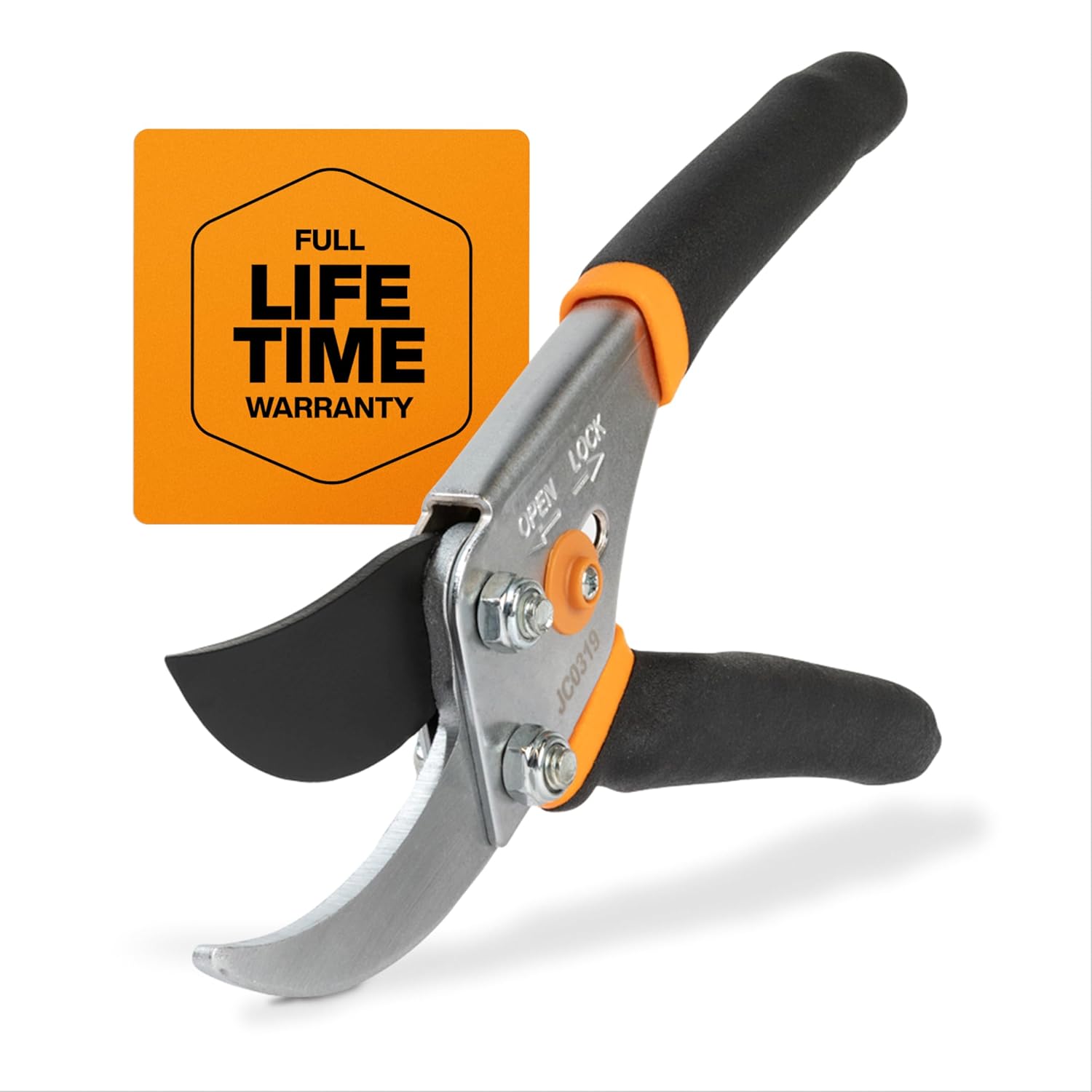 Fiskars Bypass Pruning Shears (Model 91095935J) |
8.8/10 | $12.98 | Check price |
FELCO F2 1-Inch Pruning Shears
A classic manual pruner built around Swiss-made precision and a hardened steel blade. The lightweight forged aluminum body, ergonomic grip, and replaceable parts make it a strong fit for gardeners who want a durable tool for regular pruning.
Pros
- Swiss-made construction with a strong reputation for precise cutting.
- Hardened steel blade handles branches up to 1 inch thick.
- Lightweight forged aluminum handles with a lifetime guarantee.
- Ergonomic design with non-slip coating helps reduce hand and wrist strain.
- Fully replaceable parts support long-term use.
DECERKPROTOOL DDGJ-JD 8.5-Inch Pruning Shears
These bypass pruners are built for endurance, featuring a titanium-coated Japanese SK5 blade reviewed for 5,000 cuts. The 4X lever-action design makes cutting thicker branches up to 3/4 inch significantly easier, a boon for gardeners seeking to reduce hand strain. With ergonomic handles and a one-handed safety lock, they are a strong candidate for those prioritizing comfort and durability in a daily-use tool.
Pros
- Titanium-coated SK5 blade maintains sharpness for an exceptionally long time, with evaluation cited for 5,000 cuts.
- Optimized lever-action design multiplies cutting force, making thicker branches easier to prune with less effort.
- Ergonomic, non-slip rubber handles are designed to reduce fatigue, making them suitable for users with arthritis or for longer sessions.
- Features a convenient one-handed safety lock for secure carrying and storage.
- Includes a spare spring for maintenance and is positioned as a durable, long-lasting tool.
Cons
- At 8.5 inches long, it may be slightly bulkier than smaller, more compact pruning shears for precise, delicate work.
HausGarten ClassicPRO 8.5-Inch Titanium Pruning
These professional-grade bypass pruners are built for clean cuts and lasting durability. Their ergonomic, lightweight design is frequently highlighted for comfort, making them a strong choice for extended gardening sessions and users with smaller hands or arthritis. They are rated to handle branches up to 1 inch thick.
Pros
- Sharp, titanium-coated high-carbon steel blades for precise cuts
- Ergonomic handles with non-slip grips and shock-absorbing pads reduce hand fatigue
- Anodized aluminum and titanium-coated construction resists rust and corrosion
- Lightweight design is comfortable for extended use, seniors, and those with arthritis
- Highly rated by verified buyers with a 4.6-star average from thousands of reviews
Cons
- The medium-large hand size designation may not be ideal for all users
Fiskars Bypass Pruning Shears (Model 91095935J)
A top-rated bypass pruner designed for clean, precise cuts on live plants. Its low-friction, rust-resistant blades and ergonomic grip make it a durable and comfortable choice for detailed garden trimming. The lifetime warranty underscores its value for home gardeners.
Pros
- Sharp, precision-ground steel blades for clean cuts on stems and branches up to 5/8"
- Low-friction blade coating and self-cleaning sap groove minimize sticking and resist rust
- Ergonomic, non-slip handle provides comfort and control, reducing hand fatigue
- Bypass blade design is ideal for delicate, live growth to minimize plant damage
- Backed by a lifetime warranty, indicating strong manufacturer confidence
Cons
- The all-steel construction, while durable, may feel heavier than pruners with composite handles
- Primarily suited for green growth and small branches; not for heavy-duty, dead wood cutting
Blade Sharpness and Cutting Style
Sharp blades matter more than most shoppers expect. A clean cut helps plants heal faster and reduces the crushing that can happen when a dull edge tears through stems. For professional use, you want a blade that can handle repeated pruning without forcing you to squeeze harder with every cut.
There are two practical questions to ask: what kind of material are you cutting, and how often will you be cutting it? If you mostly trim live growth, a bypass-style cutting action usually gives the cleanest result. If you are handling tougher, drier stems, the steel quality and edge retention become even more important. A sharp tool is not just about convenience, it is about consistency across an entire work session.
When a product page mentions hardened steel, precision-ground blades, or a corrosion-resistant coating, that is usually a good sign that the shear is designed for repeated outdoor use. For broader comparison context, our best garden loppers guide can help you distinguish between light pruning tools and heavier cutting tools.
Handle Comfort and Grip Control
Comfort is a major factor if you prune for long periods. Professional garden shears should feel secure in the hand without creating hot spots at the base of your palm. Look for ergonomic shaping, a non-slip grip, and handle proportions that let you keep a relaxed hold rather than a death grip.
Grip control also affects precision. When you are shaping shrubs or trimming around delicate growth, a handle that shifts or twists can make fine cuts harder to control. If you have smaller hands, pay attention to the reach between handles. If you have larger hands or wear gloves often, a slightly roomier handle design may be more practical.
The product in the second position, , is a good example to consider when thinking about grip behavior because it sits in the middle of the lineup and can serve as a useful benchmark for handle feel and everyday control. In any professional pruning tool, the goal is not just to cut, but to cut accurately without tiring your hand too quickly.
Cutting Capacity and Plant Type
Not all garden shears are built for the same stem thickness. Before you choose, think about the actual plants in your yard. Soft green stems, rose canes, woody herbs, and light shrub growth all place different demands on the blade and pivot mechanism. A tool that works beautifully on thin growth may feel underpowered on mature stems.
A simple rule helps here: if you frequently encounter stems that approach the upper limit of what a shear can safely cut, you should choose a model with a sturdier build and a more forgiving leverage profile. For thicker limbs, it may be better to move up to a lopper rather than forcing the shear beyond its intended range. That is where understanding your pruning tasks pays off.
The product in the fourth position, , is worth evaluating from this angle because capacity and leverage are often the difference between a pleasant cut and a tiring one. If your garden work includes broader cleanup jobs, you can also compare options against our best garden hoes review for a more complete hand-tool setup.
Weight, Balance, and Fatigue Reduction
Weight alone does not tell the whole story. Two shears can feel completely different depending on how the mass is distributed between the blade, pivot, and handles. A well-balanced tool often feels lighter in use because the wrist does not need to work as hard to steady each cut.
If you prune occasionally, you may not notice subtle balance differences. But if you work through many shrubs or maintain a larger property, fatigue becomes a real factor. The best professional garden shears reduce repeated strain by keeping the motion efficient and predictable. That usually means less hand squeezing, less wrist compensation, and better control over long sessions.
When comparing options, imagine a full pruning loop: open, position, cut, release, repeat. Tools that feel smooth through that cycle save energy. That is one reason gardeners often keep a set of tools rather than relying on a single all-purpose cutter. If you also need heavier cutting support, our rakes for gardening gravel guide and other related categories can help round out your workflow.
Durability, Rust Resistance, and Maintenance
Outdoor tools live in a harsh environment. Moisture, sap, and dirt can all shorten the useful life of pruning equipment if the materials and finish are not up to the job. Professional garden shears should be easy to clean and resistant enough to handle regular storage in a shed, garage, or tool tote.
Maintenance should also be simple. Even a premium shear will perform poorly if it is hard to wipe down or difficult to keep aligned. For most users, the ideal tool is one that needs only a quick clean after use, occasional lubrication, and periodic sharpening. If you expect to prune after rain or in humid conditions, rust resistance becomes even more valuable.
It helps to think of maintenance as part of the purchase, not an afterthought. A tool that stays sharp longer and resists corrosion better may save you effort over time, especially if you use it throughout the growing season. That is why we pay close attention to the materials and design cues listed by each product.
| What to compare | Why it matters | What to look for |
|---|---|---|
| Blade finish | Helps resist sap and rust | Smooth coating, corrosion resistance |
| Pivot design | Affects smoothness and effort | Stable, tight, easy-glide action |
| Maintenance access | Makes cleaning simpler | Easy wipe-down, simple sharpening |
Value, Versatility, and the Right Tool for the Job
Value does not always mean the lowest upfront cost. A better question is whether the tool solves your pruning problems efficiently. If one model handles your typical stems comfortably, requires less effort, and lasts longer between tune-ups, it can be the smarter buy even if it is not the cheapest option on paper.
Versatility matters too. Some gardeners want one dependable pair for deadheading, shaping, and light trimming. Others want a specialized tool for detailed work and a separate lopper for larger branches. If your yard includes both fine pruning and heavier cutting, the best setup may include multiple tools rather than one compromise solution. That is why we recommend browsing the broader category pages as you compare your options.
For readers planning a larger refresh of their pruning setup, the Pruning Shears & Loppers category is a helpful place to compare related tools side by side. It keeps the focus on the exact kind of yard work you are actually doing instead of forcing every tool into the same use case.
Why You Should Trust Us
Our review approach is designed to be objective and practical. We evaluate the available product data, compare stated design features, and focus on the details that matter most for real pruning tasks, including cutting style, grip comfort, durability cues, and intended use. We do not inflate claims or repeat marketing language without checking how those claims fit the category.
We also aim to be transparent about limits. When product listings do not provide full specifications, we avoid guessing and instead base our recommendations on the strongest available signals. That helps us keep the guide useful even when some products offer limited detail. The result is a comparison that prioritizes decision-making clarity over hype.
Final Thoughts
After comparing the lineup, our best overall recommendation is . It earns that position because it sits at the top of the list and is the first tool we would consider for gardeners who want a dependable all-around option for routine pruning. If you want a single pair to handle the widest range of everyday trimming tasks, this is the model we would start with.
For a strong alternative that may appeal to shoppers focused on everyday practicality, is our best value pick. It is a smart choice when you want a balanced combination of usability and straightforward performance without overcomplicating the purchase. If your yard work leans toward more demanding cuts or a specific pruning style, is the one we would point to as the best for specific use, especially if you want to narrow your decision around cutting behavior and workload.
If you are still narrowing down your choices, it may help to revisit the broader best garden loppers guide or compare this category against other hand tools on our hand tools page. That way, you can match the tool to the plant type, stem thickness, and frequency of use that matter most in your garden.
FAQs
What is the best professional garden shears in 2026?
The best professional garden shears in 2026 is usually the one that matches your pruning workload and hand comfort, not just the one with the biggest feature list. For general use, look for a sharp blade, comfortable handles, and a design that feels stable during repeated cuts. If you want a reliable starting point, our top-ranked pick is a sensible place to begin.
How do I choose the right best professional garden shears for long pruning sessions?
For long pruning sessions, prioritize balance, grip texture, and smooth cutting action. You want a tool that lets you keep a relaxed hand position and does not force extra squeezing with every cut. If you prune for extended periods, even small improvements in comfort can make a big difference by the end of the day.
Are bypass shears better than anvil shears for garden work?
Bypass shears are usually better for clean cuts on live stems because the blades pass each other like scissors. That gives a cleaner finish and often reduces damage to delicate plant tissue. Anvil-style tools can be useful for tougher, drier material, but for most precision pruning jobs, bypass action is the more versatile choice.
How often should I sharpen best professional garden shears?
The right sharpening schedule depends on how often you use the tool and what you cut. If you notice crushing, ragged edges, or increased hand effort, it is usually time for maintenance. Regular cleaning after use and occasional sharpening help extend the life of the blade and keep cuts clean.
Can I use the same tool for pruning and heavier branch cuts?
You can use one tool for a range of light tasks, but there is a limit to what any shear should handle safely. Once branches get thicker than the tool is designed for, moving to a lopper is the better option. If you need help deciding where that line falls, our Pruning Shears & Loppers category is a useful place to compare related tools.
About the author
Editor, Lawn Care Equipment. Based in Columbus, Ohio. Rachel looks after a half-acre suburban lawn and a vegetable plot. She focuses on trimmers, edgers, sweepers, tillers, and the small upgrades that make a yard easier to keep tidy.